Glidewell Positions AI-Driven Manufacturing as Core to Dental Lab Workflow
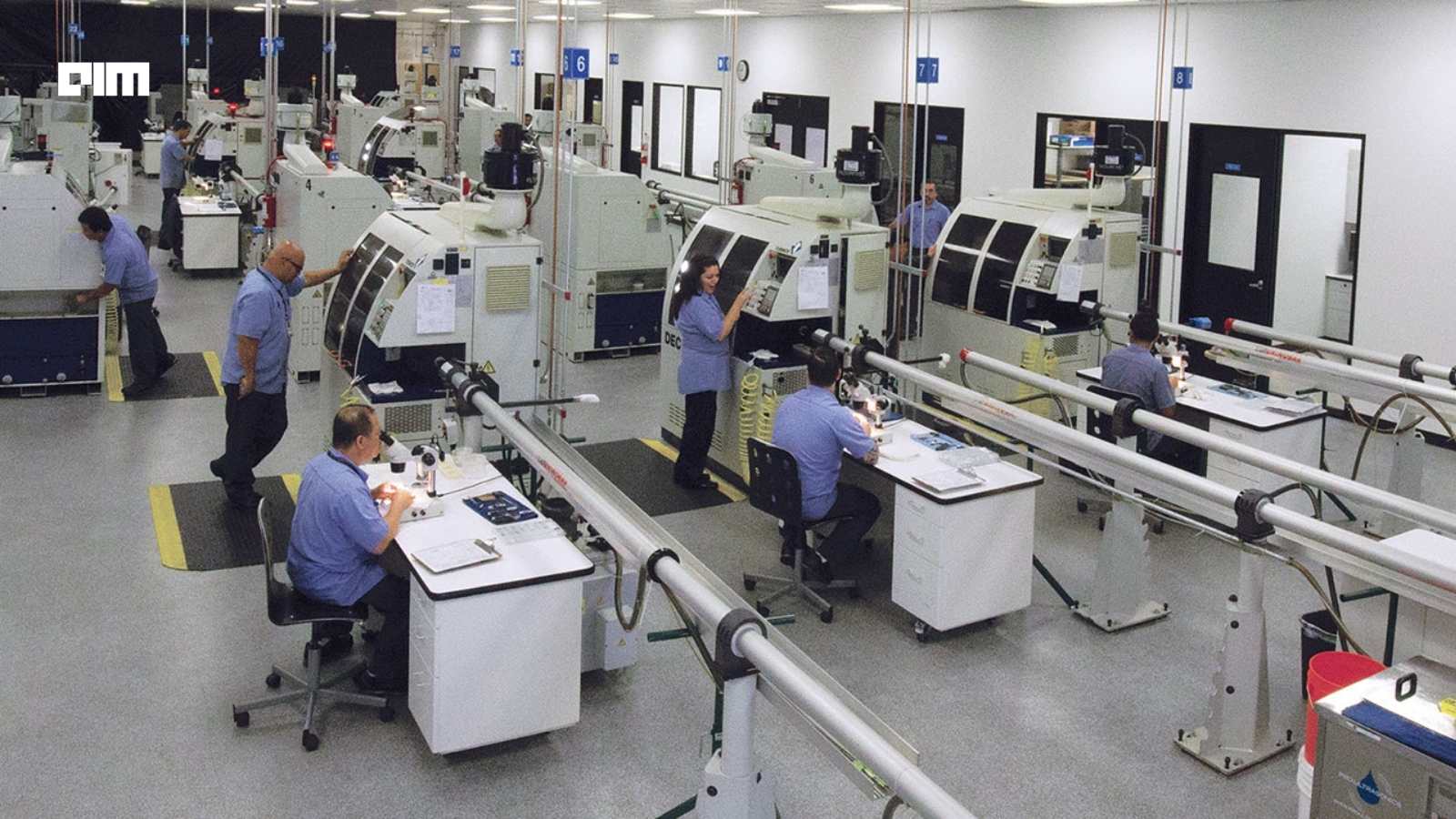
Glidewell Dental outlines an AI-led production system aimed at reducing variability, improving turnaround times, and increasing predictability for dental practices.
Glidewell Dental is expanding its use of artificial intelligence and automation across its lab operations, positioning what it calls “Intelligent Manufacturing” as a fully integrated production system for restorative dentistry. The company, founded in 1970 and now one of the largest dental laboratories globally, produces crowns, bridges, dentures, and implants at scale for dentists worldwide.
The model builds on Glidewell’s long-standing focus on vertical integration, where it designs, manufactures, and delivers restorations within a single system. This approach allows the company to control cost, quality, and turnaround time while reducing reliance on external suppliers.
The latest iteration extends that system with AI-driven design tools, automated production lines, and cloud-based orchestration. According to Glidewell, the workflow begins with digital or physical impressions, moves through AI-assisted modeling, and ends in largely hands-free manufacturing.
This shift reflects a broader move across industries where AI is applied to coordinate complex, high-volume operations. In supply chain, companies such as Medline are testing AI-driven warehouse automation systems to manage throughput and logistics in real time
Similar patterns are emerging in healthcare operations, where providers like HCA Healthcare are deploying AI to manage scheduling and workflow efficiency at scale
 >
>AI Embedded Across the Dental Production Workflow
Glidewell’s system centers on embedding AI across each stage of the production process rather than applying it to isolated tasks. Digital impressions can be processed directly through proprietary software that generates restoration designs using machine-learning models trained on prior cases.
The company states that these systems automate steps such as margin detection, articulation, and morphology modeling, while still allowing technicians to review and adjust outputs. Over time, those adjustments feed back into the system, improving design accuracy across future cases.
On the manufacturing side, Glidewell combines robotics, vision tracking, and cloud-based coordination to produce restorations with defined tolerance thresholds. The company reports tolerances at or below 50 microns, with many cases achieving closer to 20 microns, which it links to fewer remakes and reduced chair time.
This level of integration aligns with broader definitions of AI-driven manufacturing, where systems continuously optimize production based on data feedback loops. Industry benchmarks show such systems can deliver measurable productivity gains, often ranging between 20% and 40% depending on implementation.
Throughput, Speed, and Economic Impact for Practices
Glidewell’s positioning focuses on operational outcomes for dental practices, particularly speed and predictability. The company reports that approximately 90% of crown and bridge cases are completed within a three-day turnaround, with next-day options available for certain products.
By reducing variability in design and production, the system is intended to lower the frequency of remakes and adjustments, allowing dentists to treat more patients within existing schedules. This ties directly to revenue and capacity rather than clinical novelty.
Similar economic framing appears in other healthcare AI deployments, where efficiency gains translate into measurable financial impact. In hospital operations, AI systems have been linked to improvements in revenue cycle performance and operational throughput.
Glidewell’s broader strategy remains consistent with its historical approach: use technology to expand access to restorative care while maintaining cost control. The company’s scale, which includes thousands of employees and millions of cases processed annually, allows it to apply these systems across high-volume production environments.
The introduction of AI into this infrastructure does not change the underlying model. It extends it, shifting more of the workflow from manual processes to software-driven systems designed to deliver consistent outputs at scale.
Key Takeaways
- Implement AI-driven manufacturing to enhance efficiency and predictability in dental lab workflows.
- Utilize Intelligent Manufacturing for seamless integration of design, production, and delivery processes.
- Leverage vertical integration to control costs and quality while minimizing reliance on external suppliers.
- Adopt automated production lines and cloud-based orchestration to streamline high-volume operations.
- Recognize the broader industry trend of AI applications in complex operations across various sectors.