How does Tiffany & Co use AI in luxury retail?
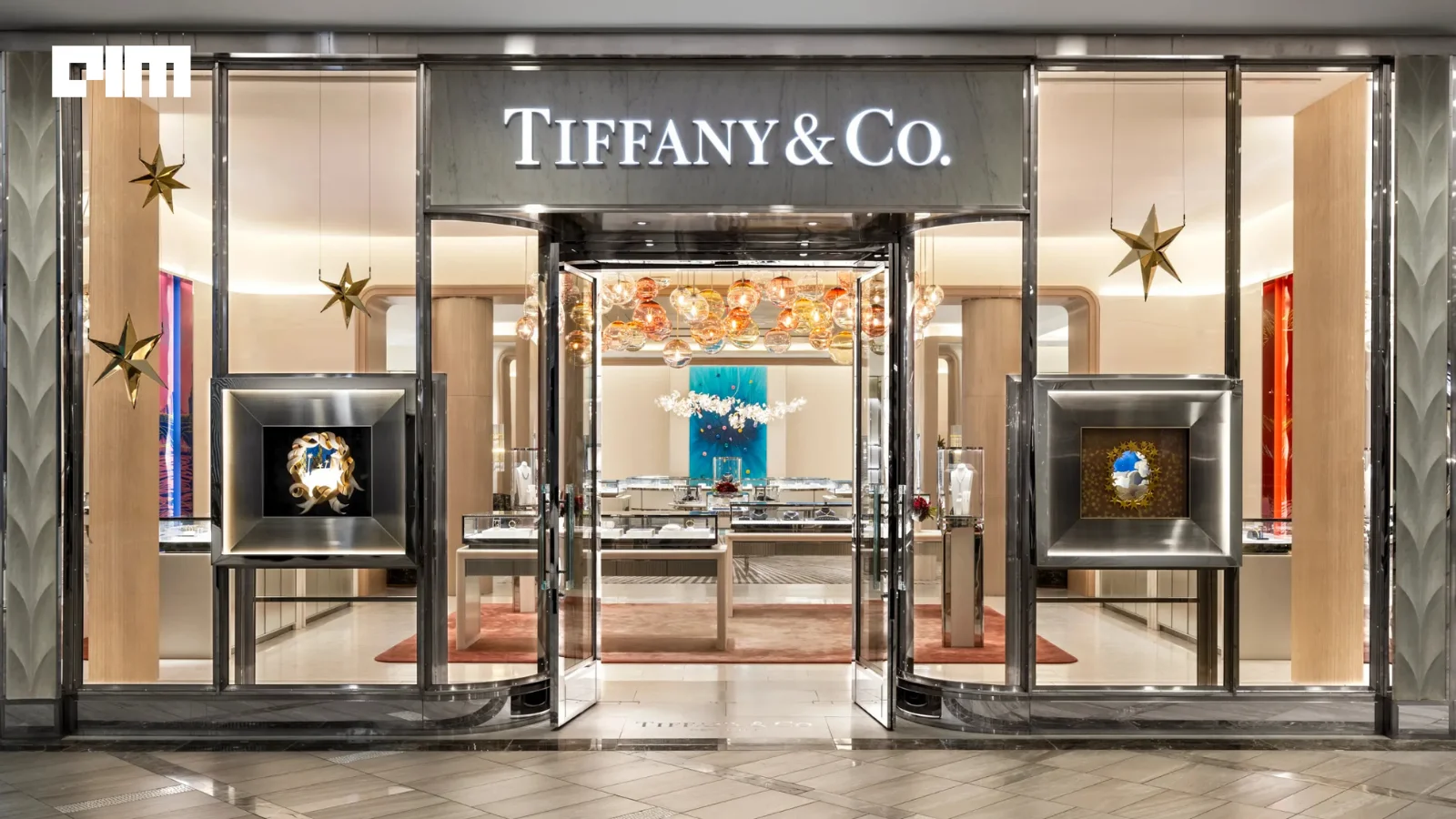
25% higher conversions. 40% bigger carts. Rings co-created with AI. Inside luxury's quiet tech revolution.
While most luxury brands cling to tradition, Tiffany & Co is doing something different with AI. Behind the iconic blue boxes and Fifth Avenue flagship stores, the 189-year-old jewelry brand has deployed AI across nearly every operation from client advisory systems that personalize shopping experiences to generative AI tools that let customers co-create bespoke jewelry with algorithms.
Since its acquisition by LVMH in 2021, Tiffany has become one of their main laboratories for AI in luxury retail. The results are great. Customers using AI-recommended products show 25% higher conversion rates. Average order values jump 40% through AI-driven cross-selling. And virtual try-on technology keeps customers on site 65% longer.
Yet Tiffany's AI strategy differs from how tech companies or mass-market retailers approach the technology. Away from automation and cost-cutting, they want to amplify human experience, personalize at scale and preserve the artistry that defines luxury while using computational power to enhance it.
How Does Tiffany & Co Use AI Today?
In-store, Tiffany associates use iPads that instantly surface AI-generated recommendations based on each customer's browsing history, past purchases, and stated preferences. When a client walks in, the system has already mapped their style, budget, and lifecycle stage. The associate doesn't rely solely on memory or intuition. They work with AI-curated intelligence.
This hybrid model drives measurable outcomes. Customers who receive AI-informed recommendations return within two weeks for curated browsing sessions at rates significantly higher than those relying on traditional sales approaches.
Tiffany also manages thousands of SKUs across hundreds of locations. Predicting demand for specific jewelry designs requires understanding seasonal trends, social media buzz, celebrity endorsements, economic conditions, and historical sales patterns simultaneously. Humans can't hold all these variables in mind. AI can.
Since implementing predictive inventory AI, Tiffany has achieved 30% improvement in forecast accuracy, 18% reduction in overstock (carrying expensive inventory that doesn't sell), and 23% reduction in out-of-stock incidents (losing sales when items aren't available). For a luxury brand where exclusivity matters and carrying costs are high, these improvements translate directly to profitability and customer satisfaction.
Luxury jewelry is difficult to buy online. How does a diamond look on your hand? Does the ring size feel right? Will the color complement your skin tone? These uncertainties create hesitation. Tiffany's AR-powered virtual try-on uses computer vision to map customers' facial and hand dimensions, allowing them to visualize products in real-time on their own bodies. The results? 65% increase in time spent on site, 48% higher likelihood of proceeding to checkout, and a 22% higher conversion rate for high-ticket items ($10,000+). Customers are experiencing it as if they're actually wearing it.
In October 2025, Tiffany & Co. introduced a breakthrough. Generative AI for custom jewelry design. At VivaTech, the company demonstrated a tool that lets customers co-create bespoke pieces with AI assistance. A customer describes what they want, "I love the design of my grandmother's ring, but I want it in modern rose gold with a larger stone." The AI generates visual iterations balancing historical inspiration with contemporary aesthetics.
This democratizes bespoke jewelry. Traditionally, custom design required extensive consultations with master craftspeople, expensive, time-consuming, and only accessible to elite clients. Now, AI accelerates the design phase, making personalization available at scale.
Tiffany also uses AI to continuously monitor how customers and the public perceive the brand across social media, review platforms, and digital channels. The system doesn't just report sentiment. It predicts it, modeling how upcoming product launches, campaigns, or market conditions might shift public perception. This forward-looking intelligence lets Tiffany adjust strategy before perception shifts negatively, and capitalize on emerging positive sentiment before competitors do.
What Does This Mean For Luxury?
Luxury brands are often portrayed as resistant to technology. Tiffany's approach proves that's wrong. AI doesn't diminish luxury. Deployed carefully, it amplifies it. Luxury is mainly about personalization, exclusivity, and craftsmanship. AI enables all three at scale.
A customer gets a more personalized experience because algorithms can track preferences at a depth humans can't. Exclusivity is preserved because scarcity and artistry remain central. Craftsmanship improves because designers and artisans spend less time on routine tasks and more on creative refinement.
This is what LVMH calls "quiet tech", artificial intelligence that's so seamlessly integrated into luxury experiences that customers don't perceive it as technology at all. They experience better service, smarter recommendations, and more beautiful products.
Tiffany's AI transformation is part of LVMH's broader goal. The conglomerate built a central data platform serving 75 brands, from Louis Vuitton to Dior to Sephora. Within that ecosystem, Tiffany emerged as a leader in client advisory AI, predictive inventory, and now in generative design. Over 40,000 LVMH employees use the group's generative AI assistant, called "MaIA," which fields 2 million+ requests monthly. Tiffany's innovations feed back into the broader system, and insights from other brands inform Tiffany's implementations.
Key Takeaways
- Leverage AI to enhance customer experiences, boosting conversion rates by 25% and order values by 40%.
- Utilize AI for personalized shopping, allowing associates to access tailored recommendations instantly.
- Adopt a hybrid model that combines human expertise with AI-driven insights to preserve luxury artistry.
- Implement virtual try-on technology to increase customer engagement, keeping visitors on site 65% longer.
- Position Tiffany & Co as a leader in luxury retail's tech revolution under LVMH's ownership.