How is NVIDIA's NemoClaw Transforming Enterprise AI?
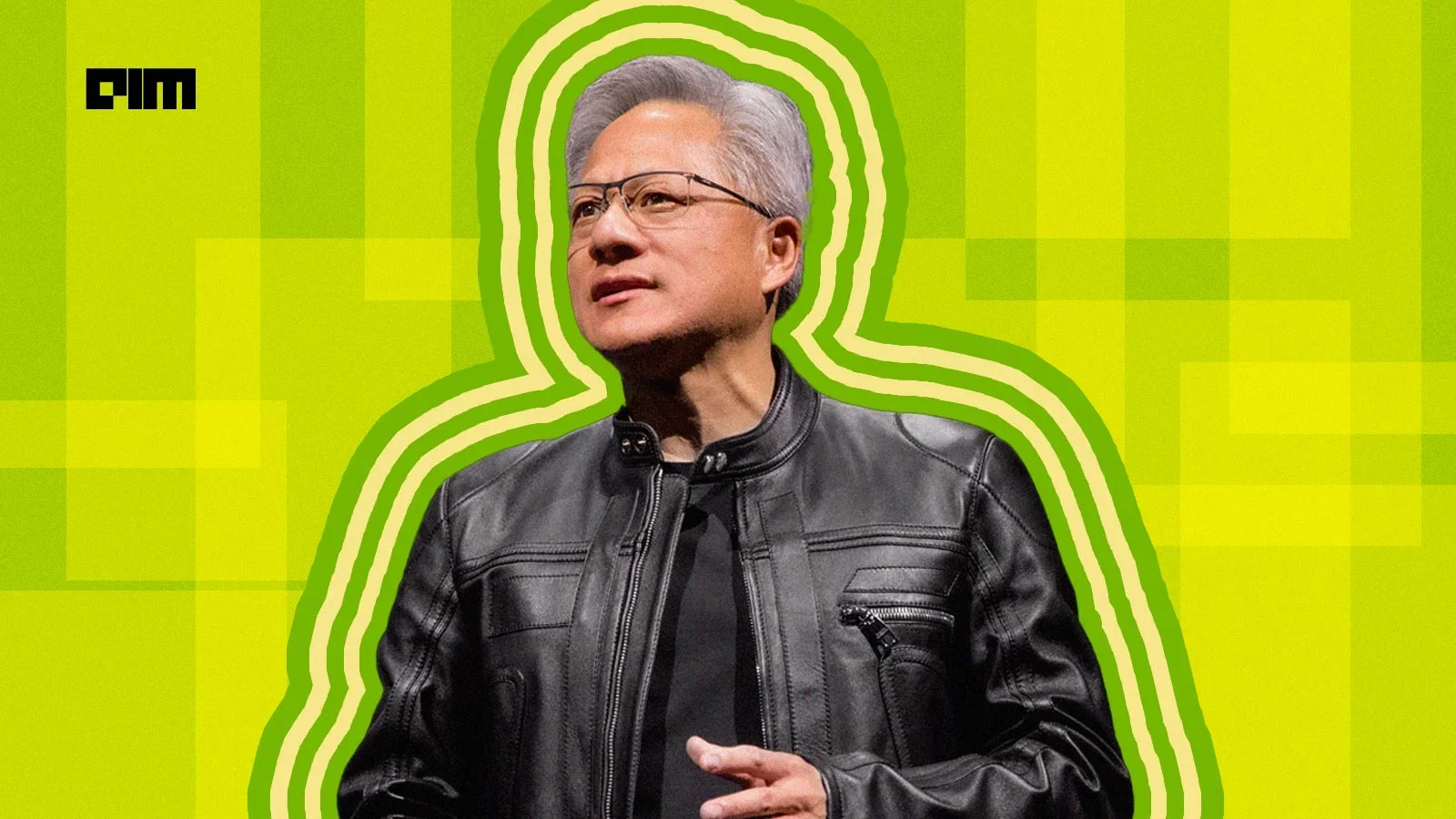
Just three months after its launch, NVIDIA’s NemoClaw powers autonomous AI engineers at Cadence, Dassault Systèmes, Siemens and Synopsys, signalling a new phase for industrial AI.
The first wave of industrial AI arrived quietly. At GTC Taipei on June 1, NVIDIA CEO Jensen Huang revealed that some of the world's largest engineering software companies had already integrated NemoClaw, NVIDIA's open-source agent stack, into production environments.
The announcement was not about chatbots or coding assistants. Instead, it focused on autonomous AI engineers capable of executing complex simulation, verification and design workflows with minimal human intervention.
The companies adopting the technology are not fringe players experimenting with AI. They include Cadence, Dassault Systèmes, Siemens and Synopsys—software vendors whose platforms underpin semiconductor development, aerospace engineering, automotive design and industrial manufacturing.
"Every company will be an agent company. Every company will have agents running inside. Every company will see that agents will need their own operating system," Huang said.
The significance lies not in another AI model entering the market, but in the emergence of a new operating layer for enterprise AI. The goal is to move AI beyond assisting engineers and towards carrying out engineering work itself.
The story begins with OpenClaw, an open-source project launched earlier this year by a developer in Vienna. The repository became one of GitHub's fastest-growing projects within weeks.
OpenClaw could organize files, write code and browse the web while running locally rather than in the cloud. For developers, that meant greater control. For enterprises handling proprietary designs and regulated data, it created concerns around governance, security and compliance.
Architecture of Trust
Rather than replacing OpenClaw, NVIDIA wrapped it with an enterprise governance framework built around OpenShell, a runtime environment that isolates AI agents within Kubernetes sandboxes and enforces policy controls. Alongside it sits a privacy router that determines whether a task should be handled locally or routed to a cloud model based on data residency requirements.
The result is a zero-trust architecture. Agents begin with no permissions and can only operate within predefined boundaries. For industries dealing with sensitive intellectual property, defence programmes and highly regulated data, those guardrails are essential.
The architecture appears to address a challenge many industrial software providers have been grappling with. While AI copilots have become commonplace, fully autonomous workflows remain difficult to deploy. Enterprises need assurance that agents can operate continuously without exposing sensitive information or violating internal policies.
From AI Copilots to AI Engineers
For Cadence, that assurance arrives at a time when the company is accelerating its agentic AI strategy.
Following its acquisition of ChipStack in late 2025, Cadence built a portfolio of specialised AI engineers spanning verification, analog design, digital implementation and workflow orchestration. NemoClaw provides the governance layer that enables those systems to operate with greater autonomy.
Cadence claims its ChipStack AI Super Agent can execute verification workflows end-to-end, reducing a process that traditionally takes weeks to less than a day. NVIDIA itself is among the platform's early users.
"By leveraging intelligent agents that autonomously call our underlying tools, we are enabling dramatic productivity gains for our customers in critical design and verification tasks while freeing scarce engineering talent to focus on innovation," said Anirudh Devgan, President and CEO of Cadence.
The implications extend beyond faster workflows. Semiconductor verification has historically required constant oversight from engineering teams. Allowing AI systems to operate independently could fundamentally change the economics of chip development.
A similar transition is underway at Dassault Systèmes.
Earlier this year, the company introduced Virtual Companions, role-specific AI agents embedded across its 3DEXPERIENCE platform. The vision is to create thousands of human-AI teams operating across industries ranging from manufacturing and life sciences to aerospace.
However, scaling autonomous agents in regulated industries presents unique challenges. Many of Dassault's customers cannot compromise on data sovereignty or intellectual property protection.
"The time has come to put knowledge to work by creating a new kind of teamwork between humans and Virtual Companions to make the invisible visible and the impossible possible before anything physically exists," said Pascal Daloz, CEO of Dassault Systèmes.
For Dassault, NemoClaw provides the infrastructure needed to run those agents inside tightly controlled enterprise environments, bridging the gap between experimentation and production deployment.
Why Engineering Giants Are Moving Fast
Siemens reached a similar destination from a different starting point. The company has been embedding NVIDIA technologies into its electronic design automation (EDA) portfolio since 2025. Earlier this year, it introduced the Fuse EDA AI Agent, designed to orchestrate workflows spanning semiconductor, 3D IC and printed circuit board design.
While the agent already coordinated tasks across multiple tools, NemoClaw adds the secure runtime required for long-running autonomous operations. The partnership is also reciprocal. NVIDIA relies on Siemens software to develop its own chips, while Siemens depends on NVIDIA's infrastructure to scale agentic engineering workflows.
Synopsys is pursuing perhaps the group's most ambitious objective.
Rather than focusing on individual engineering functions, it is working towards end-to-end autonomy across the chip design lifecycle—from design and simulation to verification and manufacturing readiness. NemoClaw provides a framework that enables long-running, multi-tool workflows to operate securely within enterprise environments without requiring customers to rebuild their infrastructure.
Together, these companies illustrate a broader shift underway across industrial software.
The first generation of enterprise AI focused on assistance. Systems generated code, summarised information and answered questions. The next phase is focused on execution. Instead of helping engineers perform tasks, AI agents are beginning to perform the tasks themselves.
That momentum extends beyond the industry's largest players. Startups such as Neural Concept, PhysicsX, Flexcompute, SimScale and Synera are integrating autonomous workflows into specialised engineering platforms.
"The challenge in engineering AI is specificity," Thomas von Tschammer, US General Manager and Co-founder of Neural Concept, told AIM. "Most AI tools weren't built to reason about geometry or physical trade-offs, and that gap matters when you're designing a product that has to perform under real-world constraints."
Beyond Software, a Compute Strategy
For NVIDIA, NemoClaw represents more than an open-source software project.
The company does not charge for the platform. Like many of NVIDIA's AI software offerings, it is freely available. The commercial opportunity lies in the infrastructure required to run autonomous agents at scale.
Every agent ultimately consumes compute, inference capacity and accelerated hardware.
In its latest quarterly results, NVIDIA reported record revenue of $81.6 billion, including $75.2 billion from its data center business. As enterprises deploy increasingly sophisticated AI agents across engineering, manufacturing and operations, demand for that infrastructure is likely to increase.
Viewed through that lens, NemoClaw lowers the barriers to deploying autonomous AI while increasing demand for the compute resources that power it.
Just 11 weeks after launch, more than 20 organizations across engineering, cybersecurity, healthcare, manufacturing and enterprise software have publicly aligned themselves with the ecosystem.
Whether NemoClaw ultimately becomes the dominant platform remains uncertain. What is becoming clear, however, is that industrial AI is moving beyond copilots. The engineering software industry is beginning to test a future where autonomous agents move beyond merely assisting engineers to becoming part of the engineering workforce itself.
>
>
Key Takeaways
- NVIDIA's NemoClaw enables autonomous AI engineers, transforming industrial workflows with minimal human input.
- Major engineering firms like Siemens and Dassault Systèmes have adopted NemoClaw for critical applications.
- NVIDIA emphasizes a shift towards AI carrying out engineering tasks rather than merely assisting humans.
- OpenClaw's rapid growth indicates strong demand for local AI solutions among developers and enterprises.
- Concerns about governance and security arise as enterprises transition to autonomous AI systems.