

ManufacturingOpinion
One AI Agent. Two Incompatible Systems. Zero Vendor Involvement.
"It's the future of systems integration and it's going to change the business dramatically over the next 12-18 months, if not sooner."


The brief
- Embrace autonomous AI agents to revolutionize systems integration within the next 12-18 months.
- Recognize the limitations of traditional vendor-built integrations due to Metcalfe's Law and market fragmentation.
- Understand that the number of potential product combinations exceeds what vendors can support profitably.
Systems integrators have spent decades hitting the same wall. No matter how many native integrations a vendor builds, the universe of possible product combinations in any given customer environment is always larger than what the vendor can profitably support. The math is the problem, and it has a name.
The brief
- Embrace autonomous AI agents to revolutionize systems integration within the next 12-18 months.
- Recognize the limitations of traditional vendor-built integrations due to Metcalfe's Law and market fragmentation.
- Understand that the number of potential product combinations exceeds what vendors can support profitably.
Metcalfe's Law states that the number of possible connections between N nodes in a network is proportional to N squared. A network of 100 endpoints produces 10,000 possible interconnections. A network of 1,000 produces one million.
Under the traditional model, where integrations are built and maintained by the software vendors themselves, most of those connections simply never get built. The market is too fragmented, the combinations too numerous, and the economics too unfavourable.
Autonomous AI agents are about to change that equation entirely, argues Steve Van Till in an analysis published on SecurityInfoWatch.com on April 21, 2026.

How Agents Solve the Math Problem
The new breed of autonomous agents, including open source projects like OpenClaw, Manus, and NemoClaw, as well as general-purpose tools like Claude Code and enterprise platforms like ServiceNow, can be instructed to carry out data synchronisation and message exchanges between software or hardware products that have no native vendor-supported integration.
If an integrator can log into Product A and Product B, they can automate the exchange of data between them. If both products have agent-friendly APIs, the process becomes even more direct.
The practical implication was demonstrated at ISC West this year by Collin Trimble, owner and CEO of Alarm Masters in Houston.
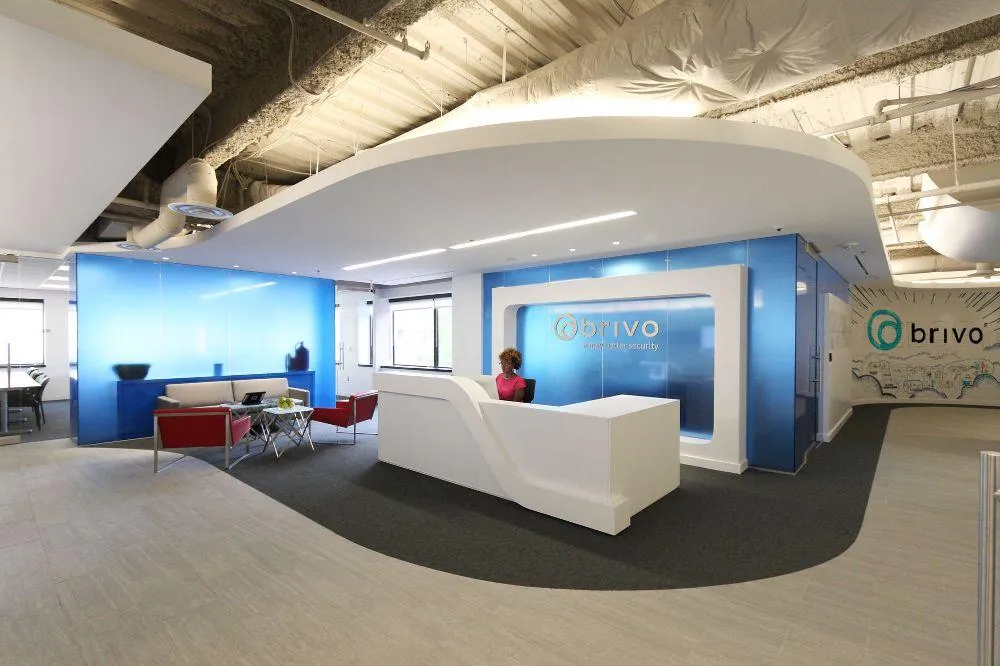
Trimble faced the familiar problem of needing to connect Brivo's access control platform with a third-party intrusion product, two systems with no native integration support from either manufacturer.
His solution was to write his own connector in OpenClaw. No software engineering team. No vendor roadmap dependency. Natural language prompts and an open source agent.
Van Till's framing of this moment is unambiguous. "This is like waking up in a different world," he wrote. "It's the future of systems integration and it's going to change the business dramatically over the next 12-18 months, if not sooner."
What Changes for the Industry
The shift has distinct implications for each part of the ecosystem. For integrators, agentic tools create the ability to develop truly unique functional combinations of third-party systems tailored to specific customer needs, without a cadre of software engineers.
Van Till argues this accumulates lasting intellectual capital from job to job, a competitive differentiator the industry has never had before.
For vendors, the strategic pressure is direct. Technology providers will need to invest in making their APIs agent-friendly, typically by providing API documentation in a format consumable by agents rather than humans, such as a discoverable LLM.txt markdown file.
Vendors that resist open systems architecture risk being routed around entirely as integrators build their own connectors regardless.
The end result Van Till predicts is integration costs trending toward zero, and a systems integration industry restructured around the integrator rather than the vendor.
Join the discussion
0 answers
People who run these systems answer here. Your verified role is shown, never your employer unless you choose.
Sign in with LinkedIn to answer
Read next


Chaos Predictions — every Monday
Where enterprise AI is heading next, read from the week’s deployments across banking, pharma, manufacturing and retail.
Free. One email every Monday. Unsubscribe in one click.


